


The Hidden Strategy Behind Every Price Tag
When we look at the price of something - a jumper, a coffee, or a concert ticket, we rarely think twice about how that number came to be. We often assume it is nothing more than a simple reflection of the cost, perhaps with a small profit margin for the firm. Yet behind each number lies a carefully constructed psychological strategy, crafted not only to influence the way we perceive value and guide the choices we make, but also to maximise profit for the business. Every £4.99, “Buy One Get One Free,” and “Was £60, Now £38” is deliberately chosen to make consumers feel like they are making a smart choice, even though a hidden strategy is involved. Firms utilise psychology just as much as economics to set prices for their products and services, and they often find that the real power of a price lies in how it is perceived by consumers, rather than in the number itself. This article will explore some of the most common pricing strategies used by businesses, including: charm pricing, anchoring, decoy pricing, and discount perception to reveal the subtle ways companies shape and influence our everyday spending choices.
Charm pricing - why £9.99 feels significantly cheaper
Even without knowing the details of pricing psychology, most people are familiar with one of the simplest and most widespread strategies: when prices end in 99. It is easy to see this strategy everywhere around us, such as £9.99, £14.95, and £159.99 in places like supermarkets, clothing shops and almost all businesses, and we see it so frequently that it is possible to also forget this is deliberate. This specific technique is known as charm pricing, and it is able to significantly influence consumer’s purchasing habits because of the way our brains process numbers. We read numbers from left to right, which gives the first digit the greatest weight in our brains. As a result, £9.99 registers as “nine-something” rather than “ten,” making it feel cheaper. Although the difference is only a penny, research has shown that prices ending in .99 can increase sales compared to rounded prices (Thomas and Morwitz, 2005). However, charm pricing is not just purely logical, but it also appeals to emotion. Over time, people have come to associate .99 endings with bargains, which creates a sense of satisfaction or potential reward when purchasing such items, explaining why supermarkets, clothing brands, and fast-food chains use it so consistently when selling their goods. While charm pricing may appear suitable in all contexts, there are numerous products for which it is less effective. Luxury brands, for example, often avoid this strategy because it can diminish perceptions of quality. A watch priced at £1,500 seems elegant and high-end, while £1,499.99 feels slightly less sophisticated. Even a single digit can change the entire impression a brand gives, whether it wants to appear accessible or exclusive.
Anchoring - how an initial price point can affect consumer perceptions
Another common tactic is something called anchoring, which is the idea that the first price we see sets the standard for everything that follows. Once that initial number enters our minds, it then becomes the reference point we use to judge what is perceived as “good value” in comparison. In an example scenario, imagine you are browsing a store for a good winter coat. The first one that you see costs £250, which initially seems quite expensive. You then find another similar coat for only £120, and immediately you feel as if this cheaper one is a bargain. This shows how the initial £250 price has anchored your perception of value, despite the fact that the £120 coat may be more than you previously expected to spend, you still perceive it as “good value for money” as you are comparing it to the £250 coat. Retailers use this bias constantly which can be observed around us in scenarios such as “was £100, now £80” - here, the higher, original price serves as an anchor to make the discount seem significant, even if the reduction isn’t as generous as it looks on first sight. This also occurs in a similar way in restaurants, where they include a few expensive dishes on their menus, which makes everything else appear more affordable in comparison. This logic is also apparent online where many subscription services offer three tiers: basic, standard, and
premium. The top option often exists to make the mid-range one look like the most sensible choice - which happens to be the most profitable for the company. Anchoring works because people often don’t perceive value in isolation; and they require something to compare it to, to form an “effective” judgement, and so businesses are happy to provide that comparison for them, grasping the opportunity to boost sales.
Decoy effect - introducing a less attractive option to make the others more appealing
On some occasions, companies take comparisons even further through a strategy known as the decoy effect, which is closely related to anchoring. This is when a third, less attractive option is introduced, not to be chosen, but to make another option appear more appealing. A well-known example of this comes from The Economist magazine. The company once offered three subscription options: online-only for $59, print-only for $125, and a combined online-and-print subscription for $125. Very few people chose the print-only option, but its presence dramatically influenced customer decisions. With the decoy present, many more readers opted for the combined subscription, perceiving it as significantly better value (two formats for the price of one). When the decoy (print-only) option was removed, most people chose the cheaper online-only subscription instead. This strategy has proved to be successful as consumers like to feel they are making rational, value-based decisions (the feeling that they are “getting more” from their money). The decoy creates a point of comparison for the consumers, and implants the impression that one choice is clearly superior. Businesses deliberately engineer these comparisons to steer customers toward a specific option (mainly higher-priced). Coffee shops, cinemas, and streaming services often use this approach, presenting multiple options where the “medium” or “standard” choice appears most balanced, even though it is strategically positioned to encourage higher spending.
Discount perception - the psychology behind the feeling of “reward” from a discount
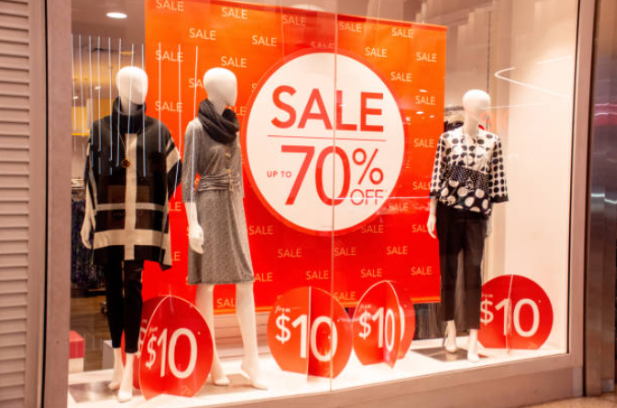
Everyone loves a sale, but the sense of excitement we get from discounts often outweighs the actual saving. Shops know that the feeling of getting a bargain is powerful, and they grasp that emotional response in consumers to encourage spending. When a big red sign says “50% off” our brains impulsively react before consumers have time to think critically. The colours, the wording, the countdown timers - they all create a sense of urgency known as loss aversion. Customers don’t want to miss out on a sale, so they convince themselves to buy immediately, before the sale is “over”. Online retailers use this constantly in phrases such as: “only two left in stock!” or “sale ends in two hours!” - almost forcing customers to make their purchase before it is no longer viable. It’s not always about the money; but instead about the fear of losing an opportunity. For example, Evryjewels frequently advertises that a sale will end in two hours, prompting consumers to act quickly. However, these “limited-time” sales often recur daily, creating a continuous sense of urgency without an actual deadline. Similarly, SHEIN occasionally presents promotions framed as winning a prize, such as a £200 coupon. In reality, almost everyone receives the same offer, but the presentation makes consumers feel lucky and almost “proud” of the coupon they obtained, which in turn makes the satisfaction derived from the purchase higher. This is why people often boast about finding an item on sale, yet rarely mention paying full price - the sense of pride in securing a bargain enhances their satisfaction with the purchase.
Conclusion - make informed choices and look beyond the price tag
Once you start to notice these strategies, it becomes clear how much thought goes into every price we see. From supermarkets to online subscriptions, every number is designed to elicit specific feelings like reassurance, excitement, or urgency; all whilst guiding our spending decisions. Although it may seem like it on the surface, the intentions behind these strategies are not purely manipulative and when applied responsibly, pricing psychology helps businesses communicate value as well as assisting consumers in making choices that feel logical and rewarding. Despite all this, understanding the methods behind charm pricing, anchoring, decoy pricing, and discount perception gives consumers greater awareness behind the hidden strategies business place, and gives them more control in their purchasing decisions. So the next time you’re drawn to a “limited-time offer” or a price ending in “.99”, you can pause and ask whether your decision is truly yours, or if it has been subtly influenced.
References:
Images:


Comments